-
A Tale of Two Market Towns – Successfully Reinventing the Town Centre in 2022 (or Not as the Case May Be) – 18th/20th November 2022
I have just returned from a weekend away that gave me the opportunity to look at two contrasting market towns and how their town centres are responding to current pressures. These two towns are of a similar size and both act as the focal point and service centre for a substantial rural hinterland. They are Ross on Wye in Herefordshire and Carmarthen in South-West Wales. My findings were very different…..
The current pressures on all town centres stem from the same root causes: changing shopping habits with increasing channel shift away from “bricks and mortar” stores to internet retailers; a widening of permitted development rights within town centres allowing for more changes from retail without the need for planning permission; current price inflation running at record post-War levels which reduces disposable incomes; and, controversially, the impact of Brexit. Despite these common causes, town centres are responding to these challenges differently, and with varying degrees of success. As I found out last weekend.
Ross is an attractive town of about 11,000 people, located to the south of Hereford, a few miles from the Welsh border. I had last visited it about 6 months ago and was interested to see how the intervening period had treated it.

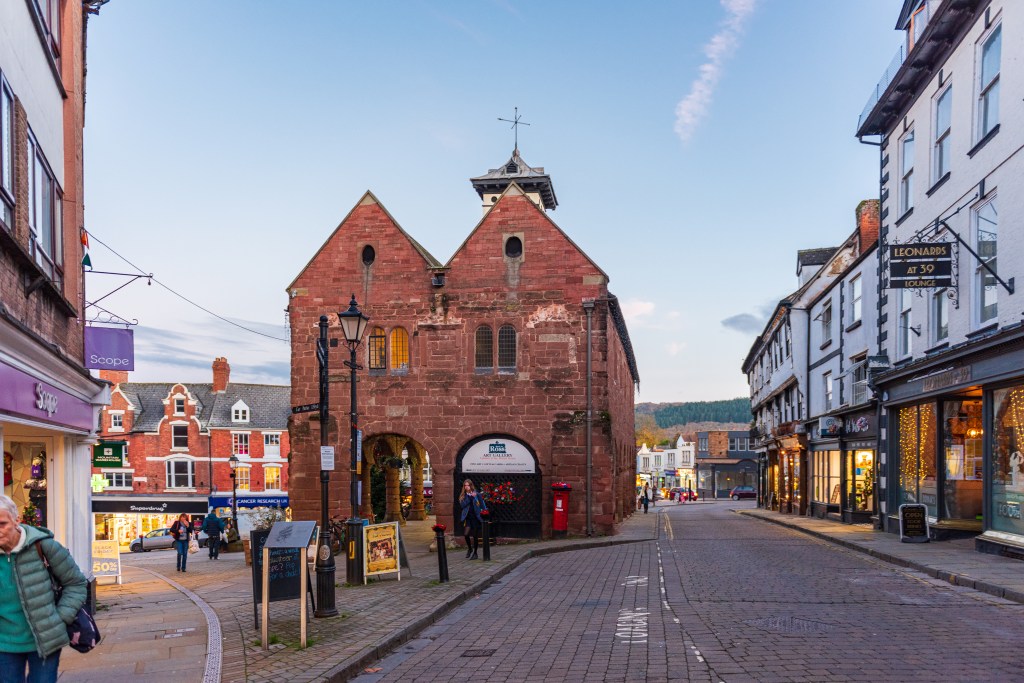
The town centre is quite compact, focused on the Market House, which sits at the brow of a hill, with four radial streets running from this focal point. I counted a total of 12 vacant units across the whole town centre, at least one of which was having an active refit, so was unlikely to be vacant in the longer term. This equated to a vacancy rate, across all town centre units, of something like 5% or less, which is impressive.
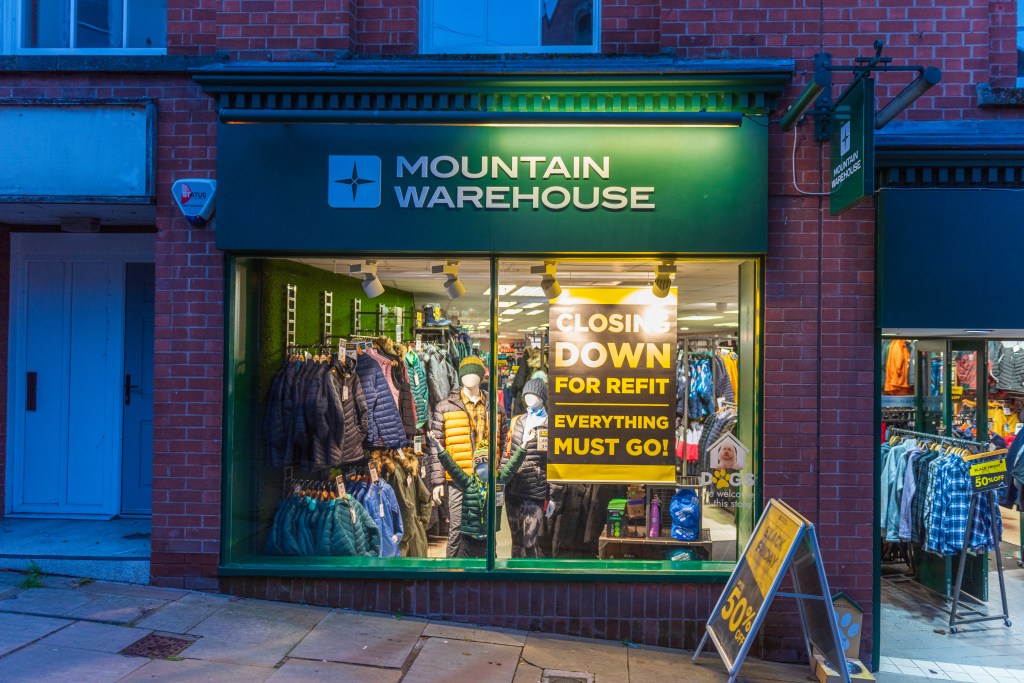
I also noted that a former vacant bank building, on a highly prominent site, was now in active use as a coffee shop and cafe. This was pleasing. Equally so, was the fact that an equally prominent unit opposite this was the premises that was being refitted, referred to earlier. I saw a “closing down” sign on Mountain Warehouse, which was concerning. However, when I looked closer I saw it was to close “for refit”, which must show that the retailer has confidence in the future of the town centre.

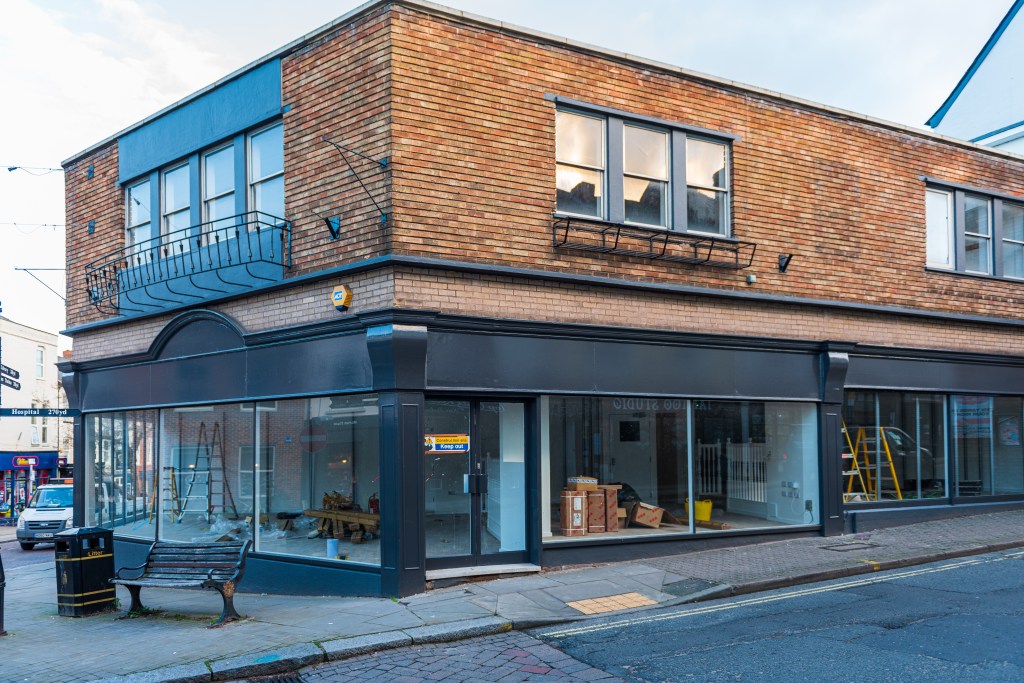
Ross therefore appears to have no vacant units in prominent locations. Indeed, of the vacant units noted, almost all of them were at the periphery of the town centre, in notably secondary locations. What seems to be the primary retail area looked to be vacancy-free, and with a good mix of independent units dominating the limited presence of national retailers. This gives the town an interesting and attractive overall shopping offer, with an emphasis on the smaller, specialist retailer. It still has a bookshop, a kitchen goods shop and a music shop, for example, all of which are rarities these days.
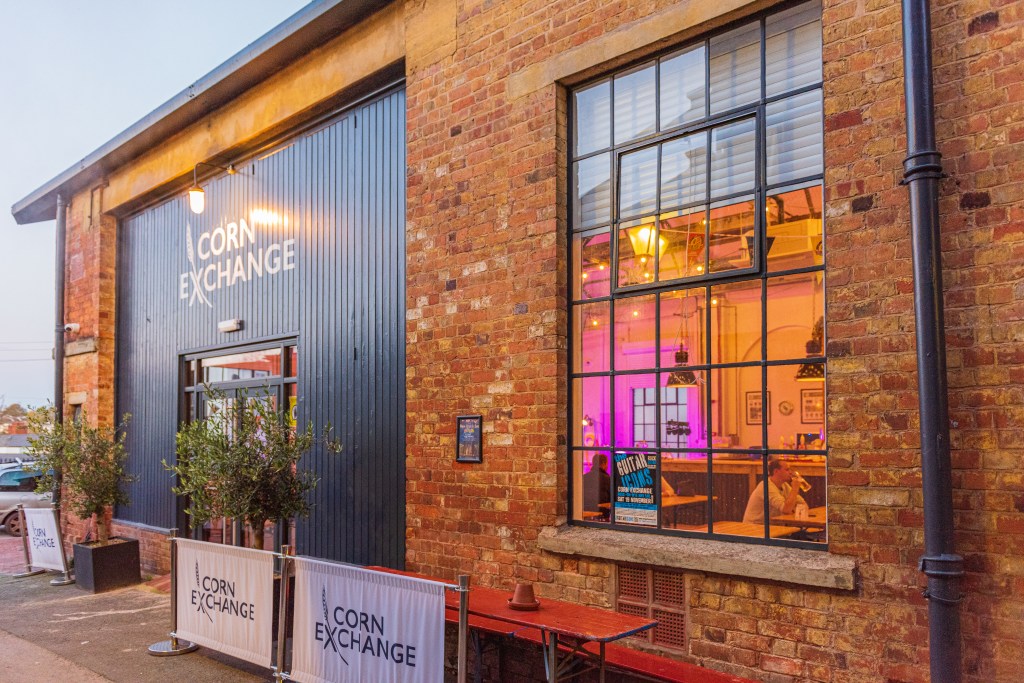
So, the retail side of things looks like it is doing well. How about food and drink outlets (a topic always close to my heart) and other services? There are numerous cafes and restaurants in the town centre and the food offer is of a decent quality and is varied. One bar had closed (but it was pretty poor in my previous experience and won’t be missed). However, two previously closed pubs (The Cock and The Anchor) had reopened, which was against national trends and extremely impressive. Furthermore, a totally new brewery and bar (I refuse to use the word “craft” on principle), The Corn Exchange, had opened in a converted garage in the heart of the town centre. As well as a brewery and tap house, it is also a thriving live music venue, again widening the town centre’s overall offer.
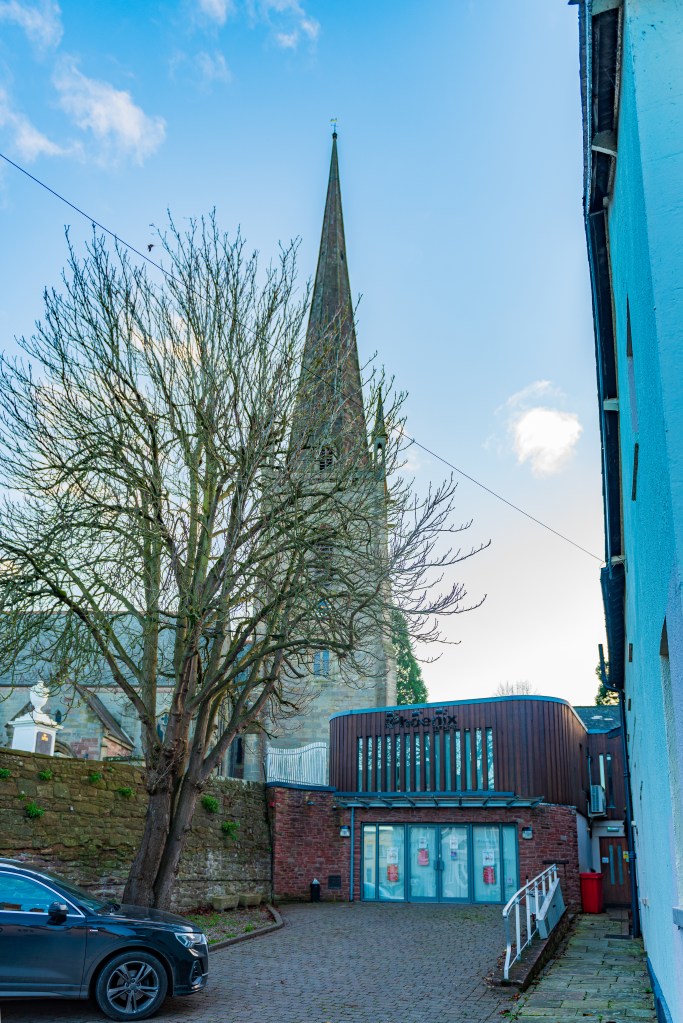
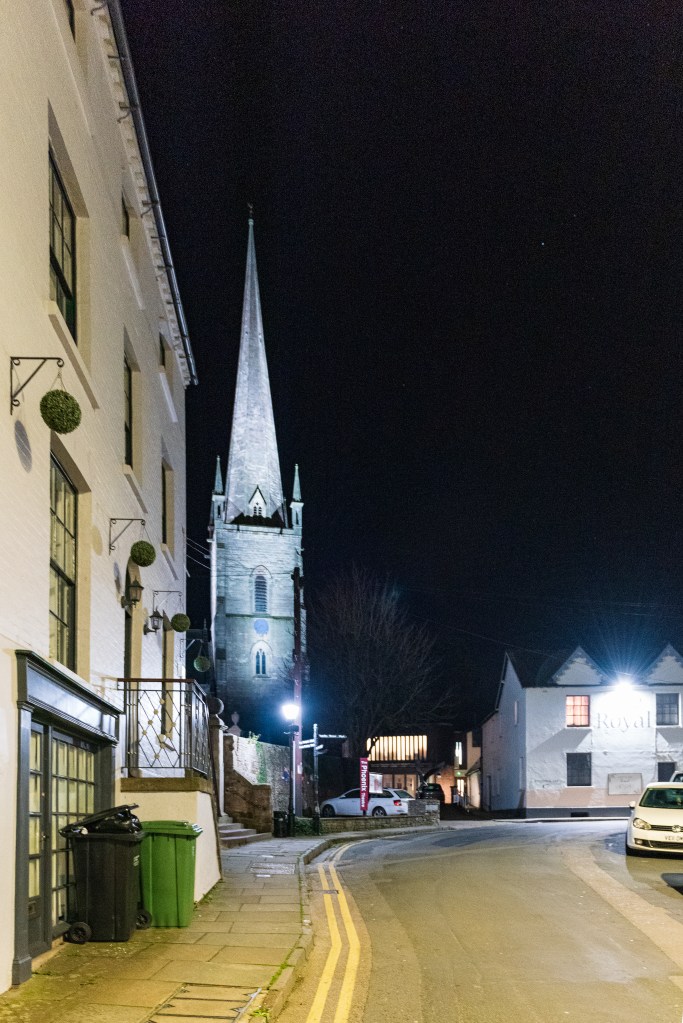
The town centre also has two good hotels: The Kings Head and The Royal, and both seemed to be very busy on a Friday evening. It also has a town centre theatre, The Phoenix, which looks like it has a full programme and doubtless adds to the nighttime economy.
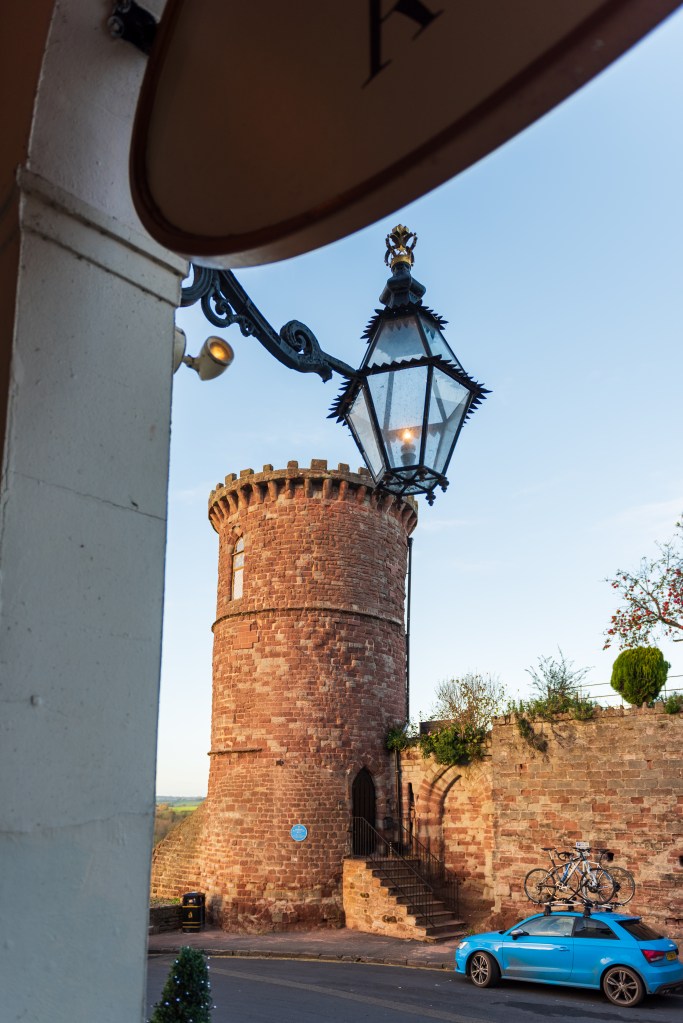
I can’t give any firm pointers as to why Ross is doing so well comparatively speaking. Its socio-economic profile is relatively high, and this may be a significant contributing factor. It is very attractive, and Herefordshire Council clearly pay due attention to securing high quality shopfronts, helpful fingerposts and practical street furniture like benches and planters. The overall impression is of a buzzing market town, which is doing very well, all things considered.

Then I went down the A40 to Carmarthen…..
Carmarthen benefits from an impressive setting, on a plateau above the River Towy and the townscape is dominated by its castle and the imposing County Hall building. Allegedly Wales’ oldest town, it has a population of around 14,000, so slightly larger than Ross. It has a very substantial rural hinterland, at least in terms of area, if not people. It’s nearest competing service centres are Haverfordwest and Llanelli, with Swansea being the regional centre.

Carmarthen has a substantial and widespread town centre, focused on Guildhall Square and Old Market Square behind it, with shopping streets radiating from them in each direction. The heart of the town is attractive, with extensive Georgian facades. An independent department store, Days, still operates in Guildhall Square and many national retailers are represented in the town.
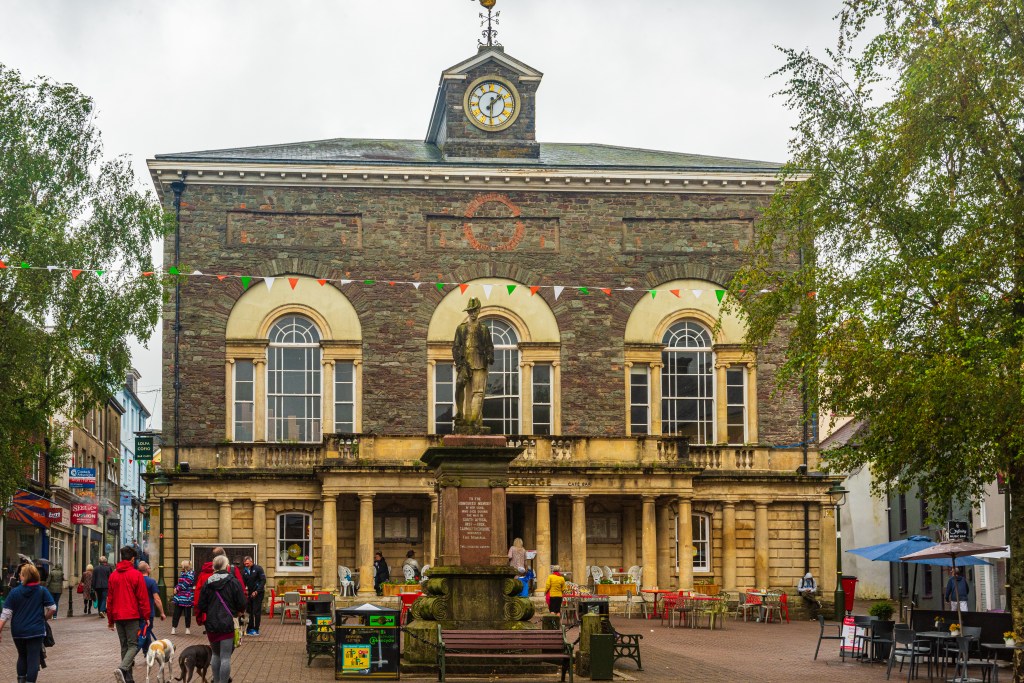
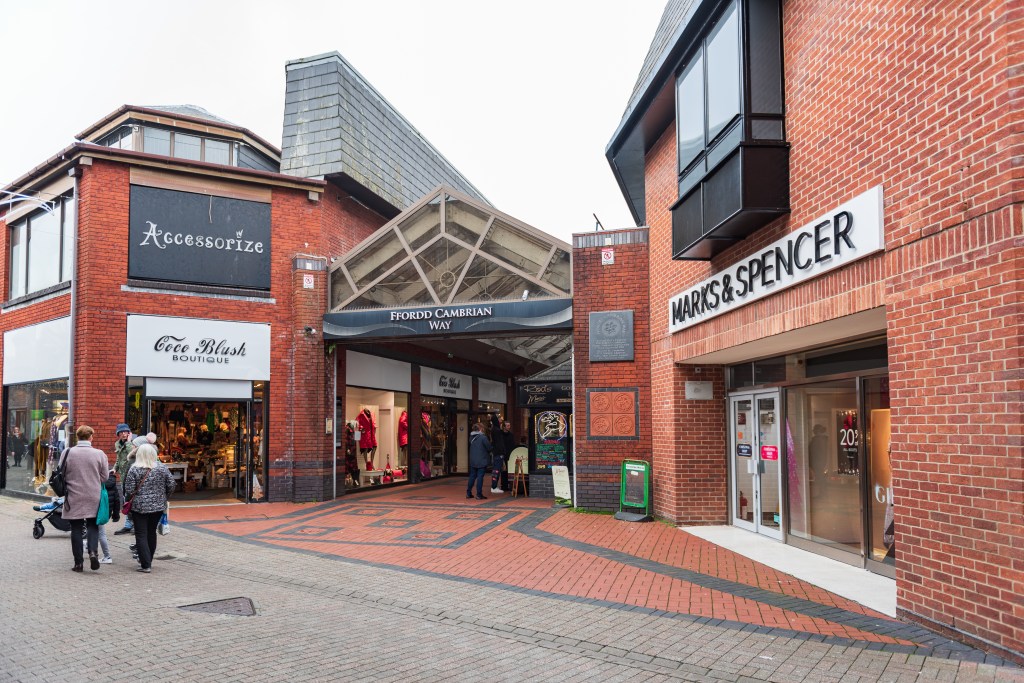
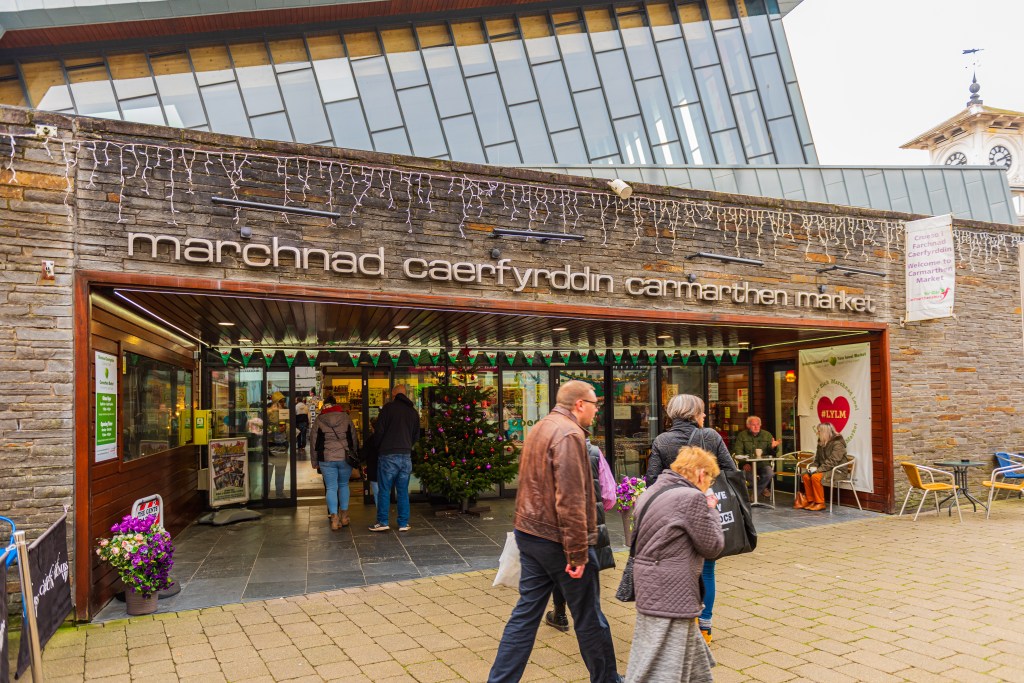
Red Street is the main shopping street running north. It has experienced extensive redevelopment in the 1970s or 1980s and is a functional street where many of the national chains are located. Red Street also has Cambrian Way, a single-level retail arcade, and the purpose-built (and quite large) Carmarthen Market Hall, which was built in 2009 and was busy on the day of my visit. Red Street has a very low vacancy rate and, if seen as representative of the town centre, would suggest that it is still a healthy and vibrant centre.
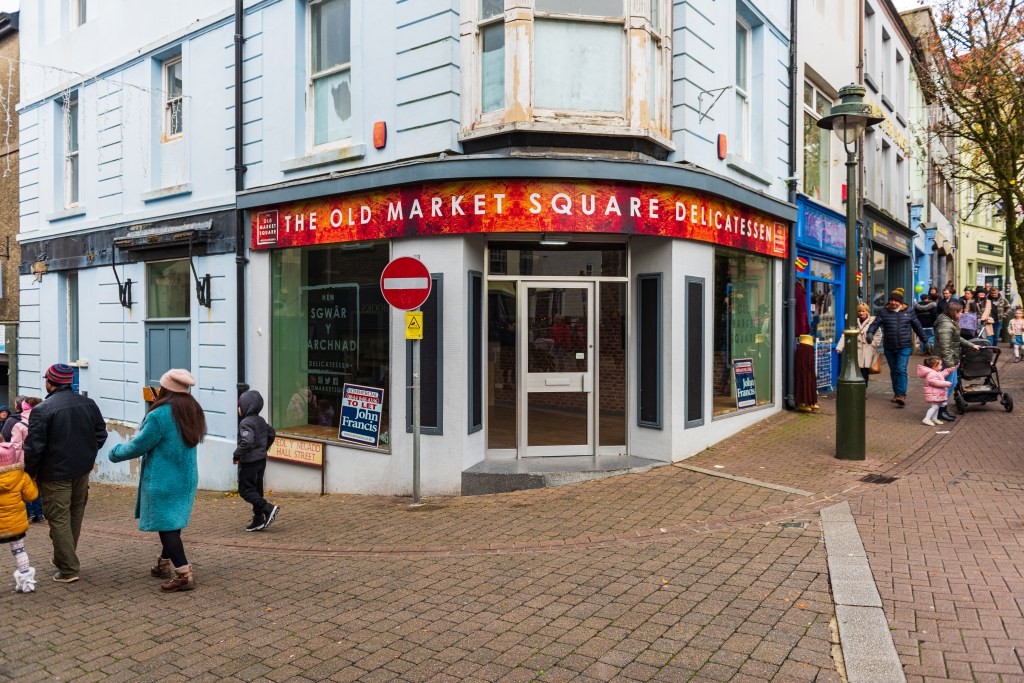
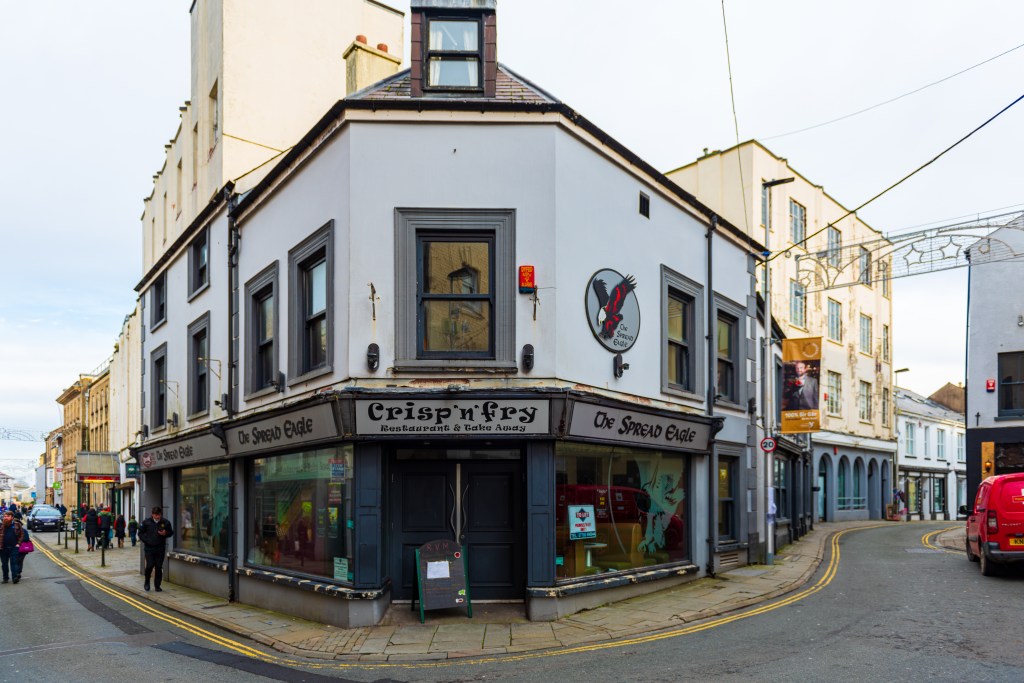
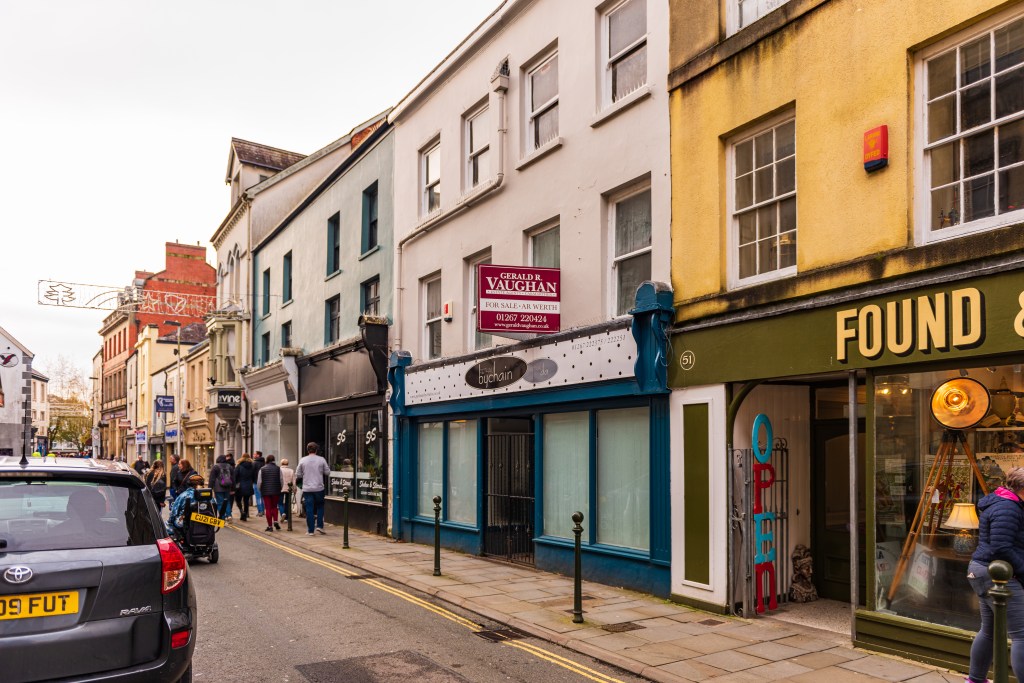
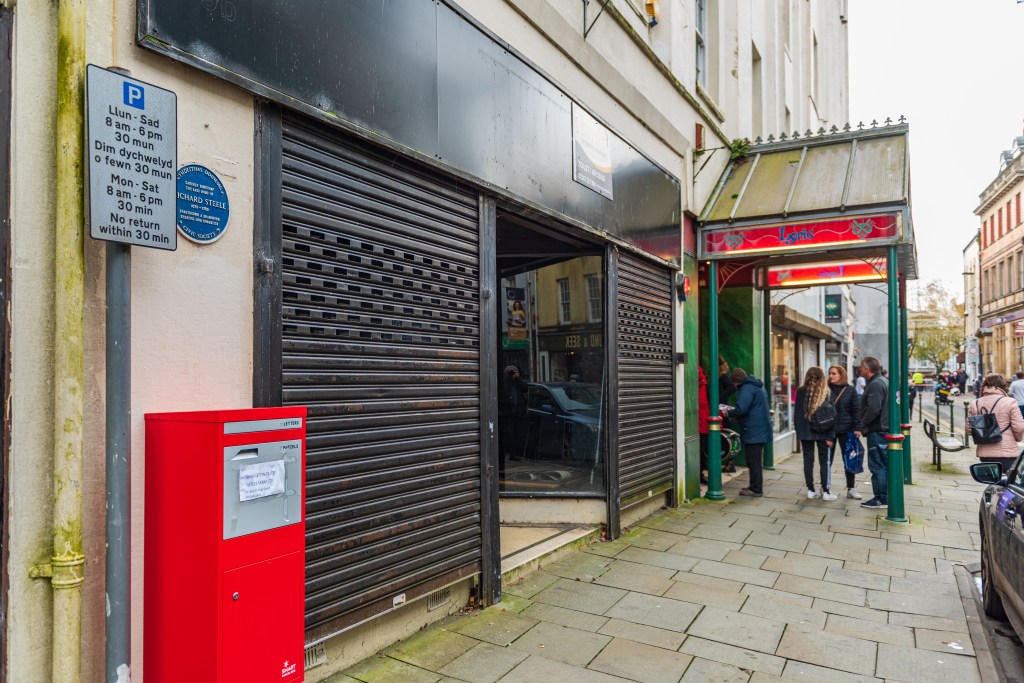
However, the true situation can be seen if one moves into other primary shopping streets, such as Nott Square and King Street. At the time of my last visit, a year ago, these had a low vacancy rate; indeed, King Street was a centre for independent shops, of a quality that in itself was almost a reason for a visit to Carmarthen. Now, there are substantial numbers of vacant units in both streets. Some of these are in prominent locations, on important corners. I was particularly sad to the see the closure of an excellent deli – although I understand this was due more to the ill-health of the owner than to trading conditions. I was less surprised to see the closure of the large and corner-site Spread Eagle. A former pub, its last incarnation was as a fish and chip shop in the day and a nightclub at night (I kid you not…).
King Street has lost its critical mass now and is looking very sad, although a refurbished Wetherspoons pub has recently reopened (whether this is a good thing is questionable, but at least it’s not a “craft ale” pub!). The Lyric Theatre is located in King Street and that, along with the wonderful pub Cwrw, are two of the only remaining beacons of light in a street that has palpably declined in the last 12 months.
If one goes to the north of Red Street, one finds the fairly recent St Catherine’s Walk development. This comprises a number of national and independent retailers, restaurants and a Vue cinema. However, the biggest issue is the vacant Debenhams, located here, that used to anchor the town centre. This closed due to national retailing circumstances, rather than local trading conditions, but has left a very large unit with an uncertain future – although Carmarthenshire County Council are proposing the use of part of the floorspace as a public service hub.
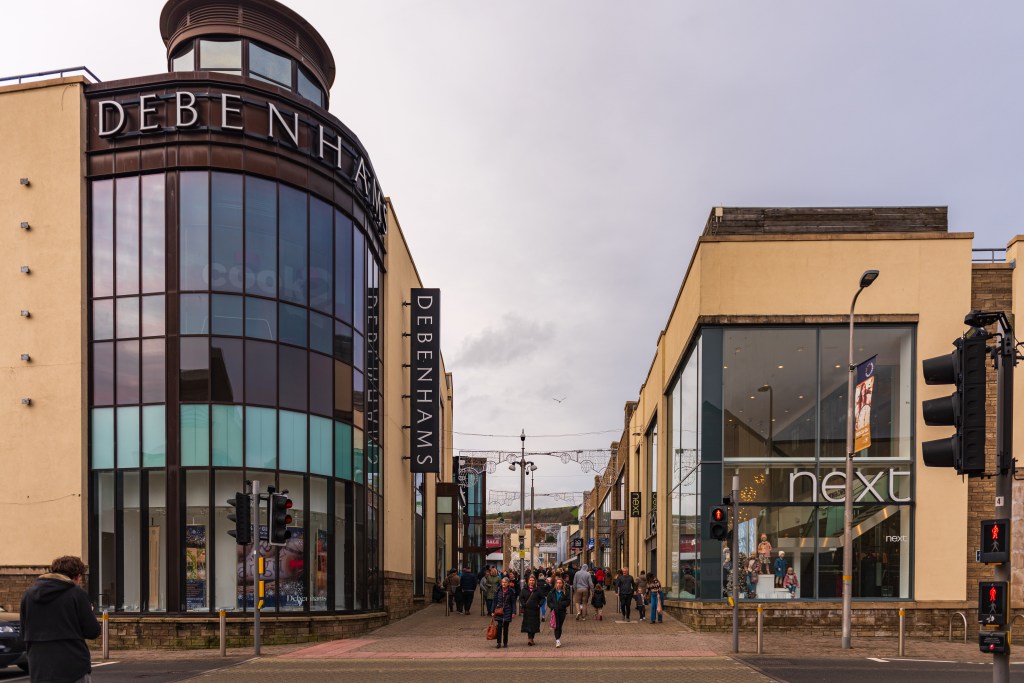
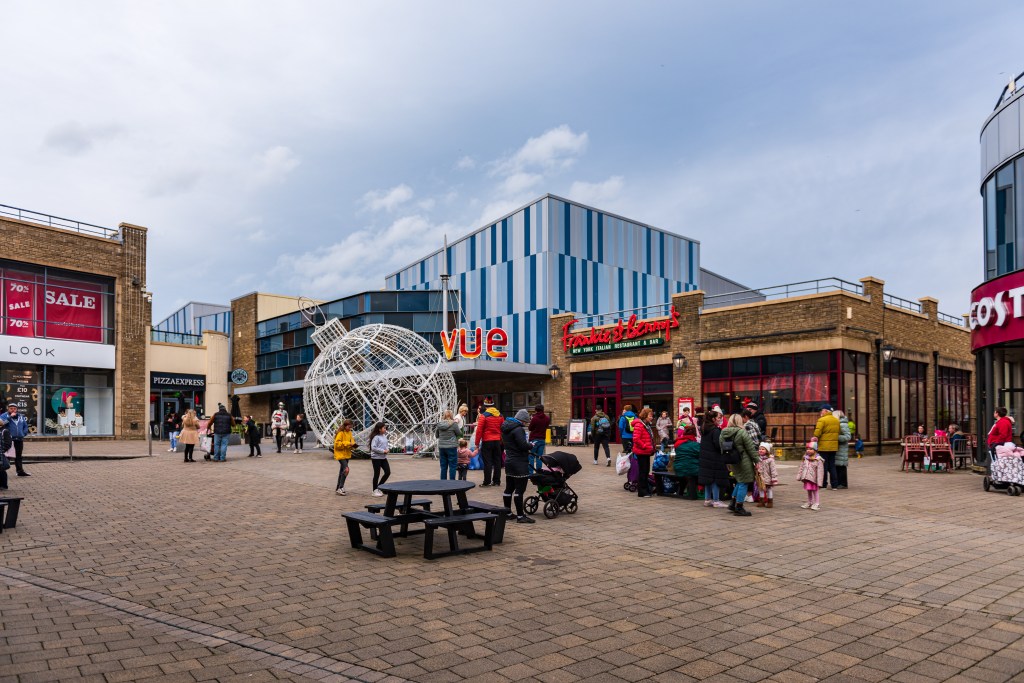
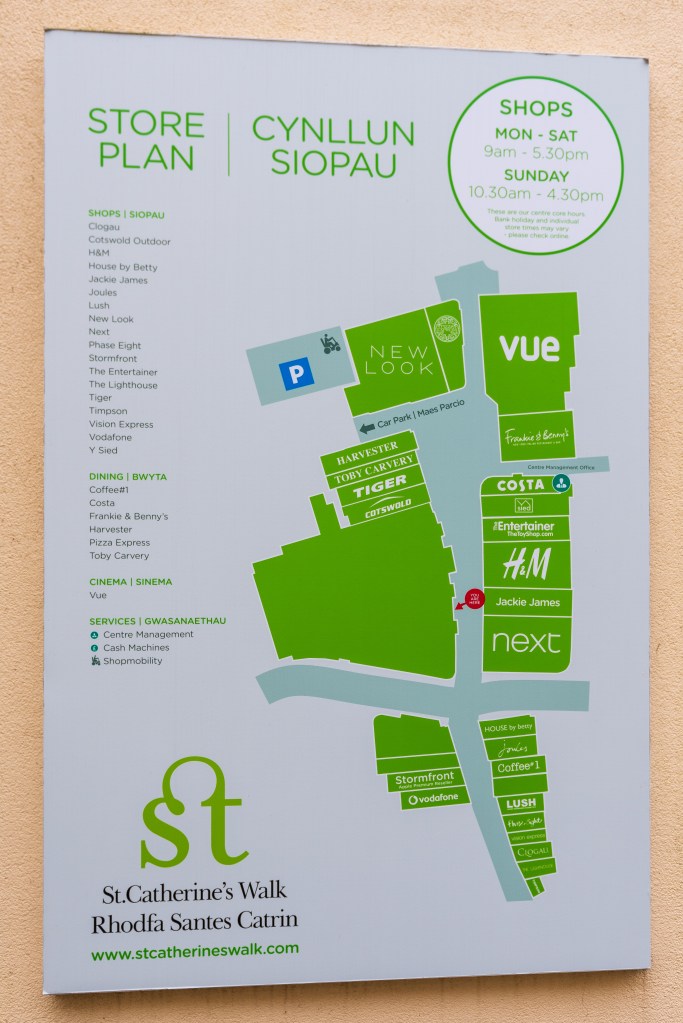
Carmarthen is clearly not as healthy as Ross, despite its probably larger retail catchment area. I can only speculate on the reasons and would suggest that they are probably largely the national challenges and trends mentioned earlier. Carmarthen, unlike Ross, had an anchor department store and this has closed, reducing its overall offer and attractiveness. This, coupled with the loss of relatively many prominent and/or seemingly high quality units, unlike Ross where vacancies were peripheral to the crime pitch, means that some form of action needs to be taken to stimulate the town centre. It has a thriving nightlife (some would say too thriving!) which revolves around clubbing, but less of a “quality” restaurant offer than Ross. It also has a wide range of hotels for its size, but, with two key exceptions (Ivy Bush Royal and Hotel Spilman) these tend to be of limited quality and size.
It was interesting to contrast two market town centres over one weekend. Lessons can be learned from both but there are accidents of history involved, such as the loss of an anchor department store, but also issues of apparent spending power: Ross’ population seems to be generally wealthier than Carmarthen’s, and this is likely to reflect itself in the range and quality of shops the town can support.
I wish both towns well and look forward to visiting on further occasions to see how they continue to face these challenges that, doubtless, will only get more difficult.
-
Urban Regeneration and the Post-Soviet Industrial Landscape of Tallinn, Estonia – 29/31 October 2022
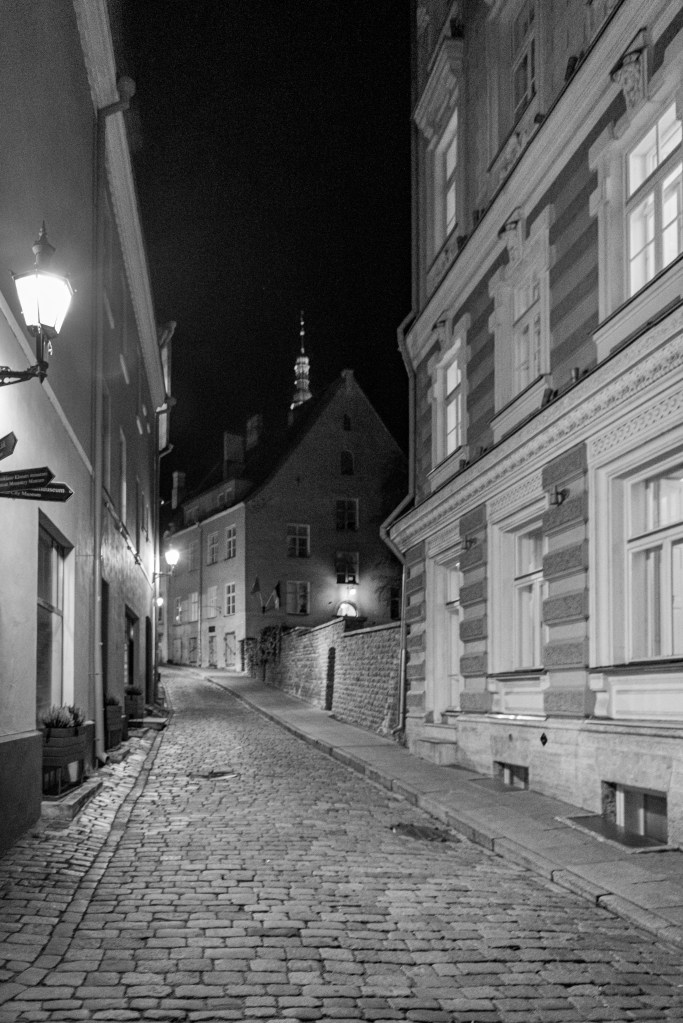
I’ve just returned from a short trip to Tallinn, exploring and photographing the many innovative uses and conversions of (largely) former Soviet industrial areas and buildings. These make a valuable contribution to Tallinn’s brownfield land supply and also, interestingly, to its increasingly varied and rich cultural infrastructure. I was staying in the Old Town, which is deservedly a key visitor attraction in the Baltic States. However, it’s interesting to explore some of the areas less visited by tourists…..
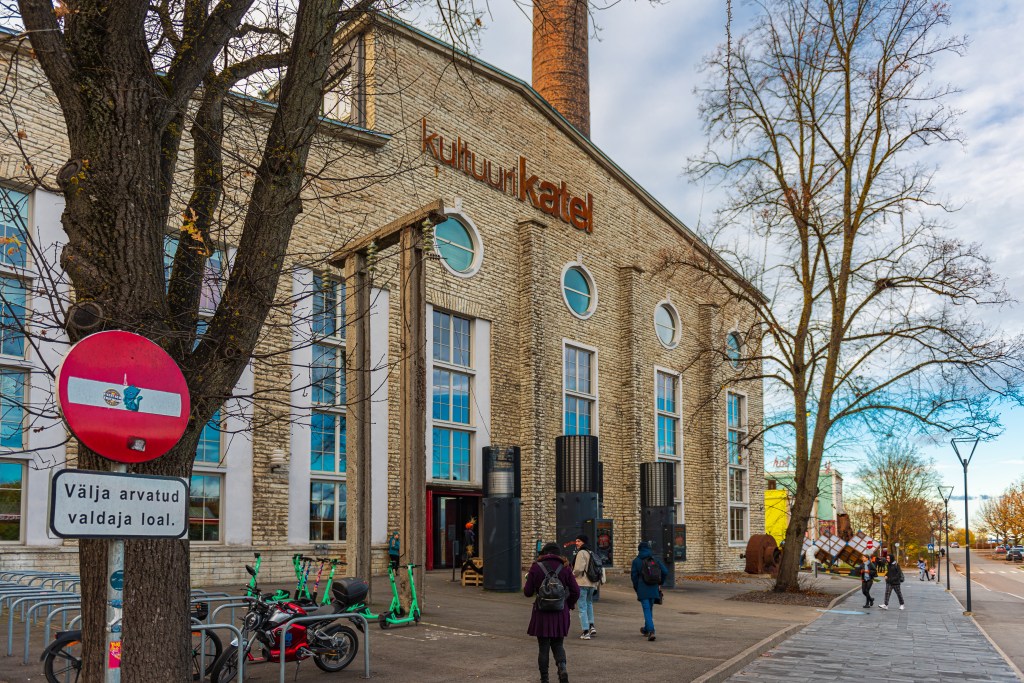
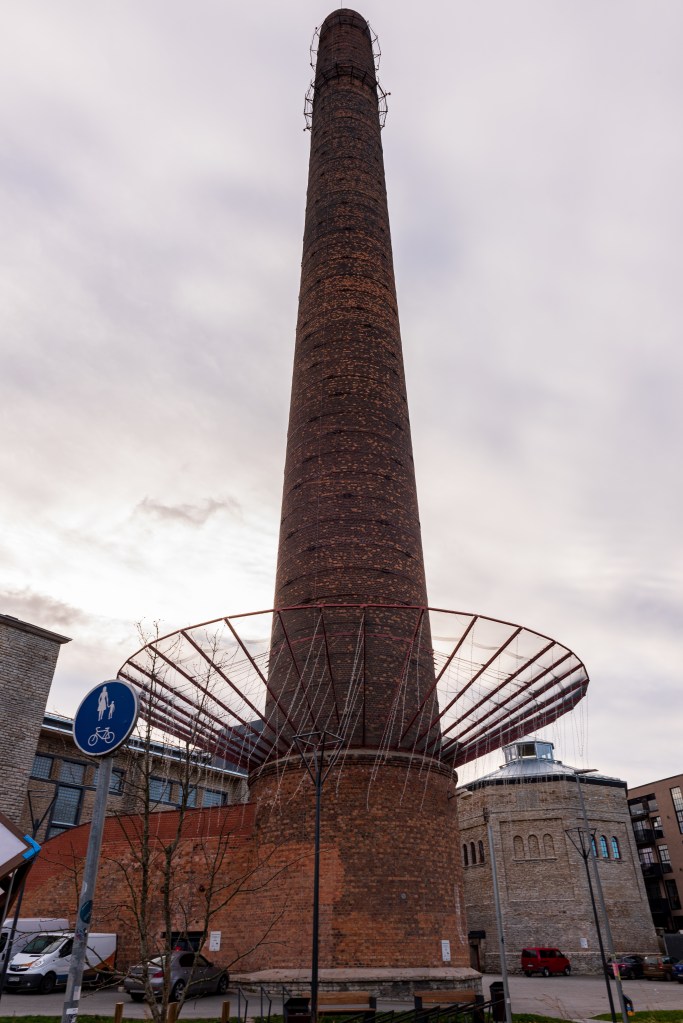
My exploration started immediately to the west of the main port, in an area dominated by a former coal-fired power station. This is now the Energy Discovery Centre, with its turbine hall now providing a large and lofty exhibition space. The former chimney stack is prominent in the cityscape, rising high above a number of other, smaller, former factory buildings, which are now also cultural assets. These include the Contemporary Art Museum of Estonia, which was showing an exhibition entitled “Crawl Out Through the Fallout” – which might be somewhat prescient, given the current geopolitical situation….
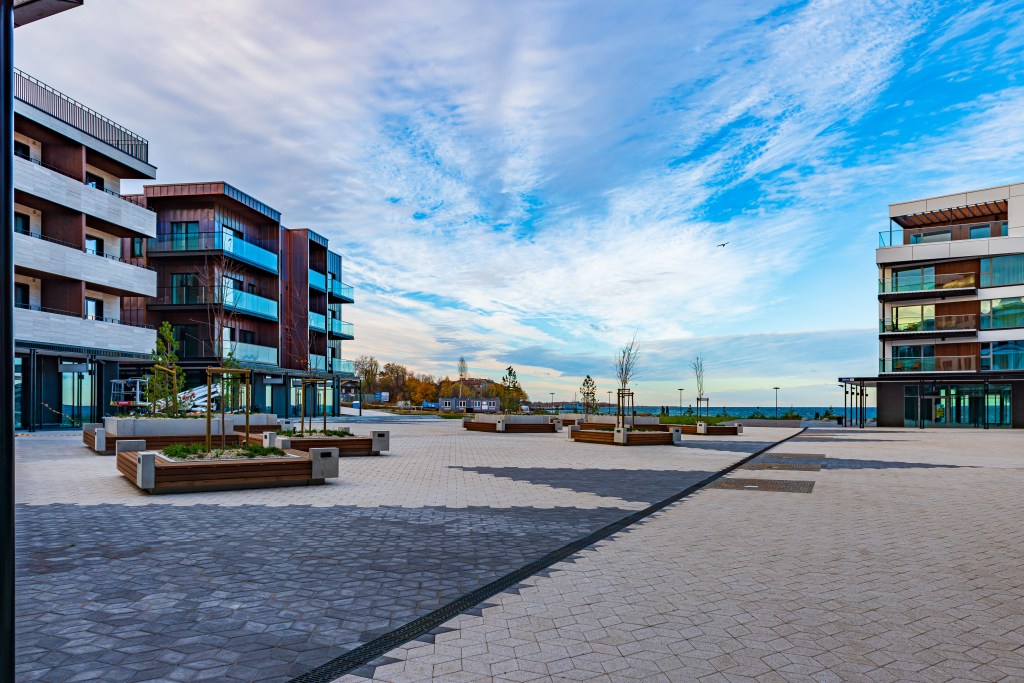
A few hundred yards further to the west is the emerging residential area of Kalaranna, a medium-density development of twelve four- and five-storey buildings on a brownfield site area of around 6 ha. It’s set on the shore, within an extensive hard and soft landscaped setting, including a new beach promenade. The completed phase includes 240 apartments, commercial space at ground floor level and underground car parking. I was impressed with the openness of the development within generous areas of public space and also the use of the former wharf area as a key urban design concept. The commercial space remains largely vacant, however, perhaps awaiting the development’s completion.
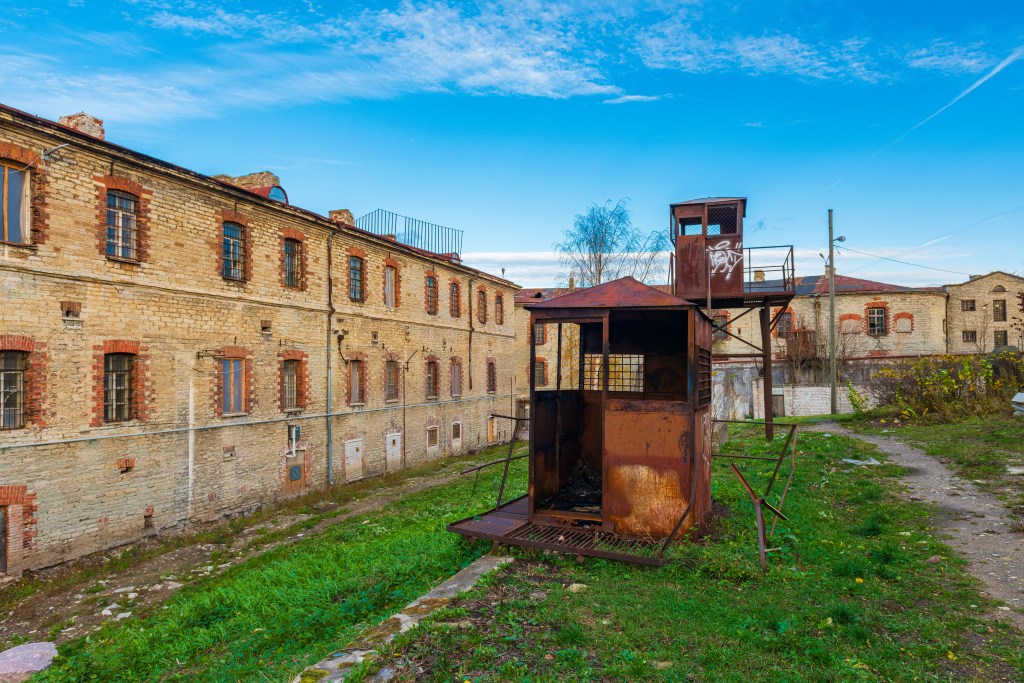
Walking further to the west, I came across, by accident, the former Patarei Prison. Dating from the 1830s, this foreboding and crumbling building has a grim history. Originally built as barracks, it was converted to a prison in 1919 and is considered to be a prominent symbol of both Nazi and Soviet political terror. It accommodated up to 1,500 prisoners and closed in 2002. It is planned to open it in 2025 as a museum to the crimes of communism; however, as you can see from the photos, no works appear to have commenced at all and the building slowly decays.

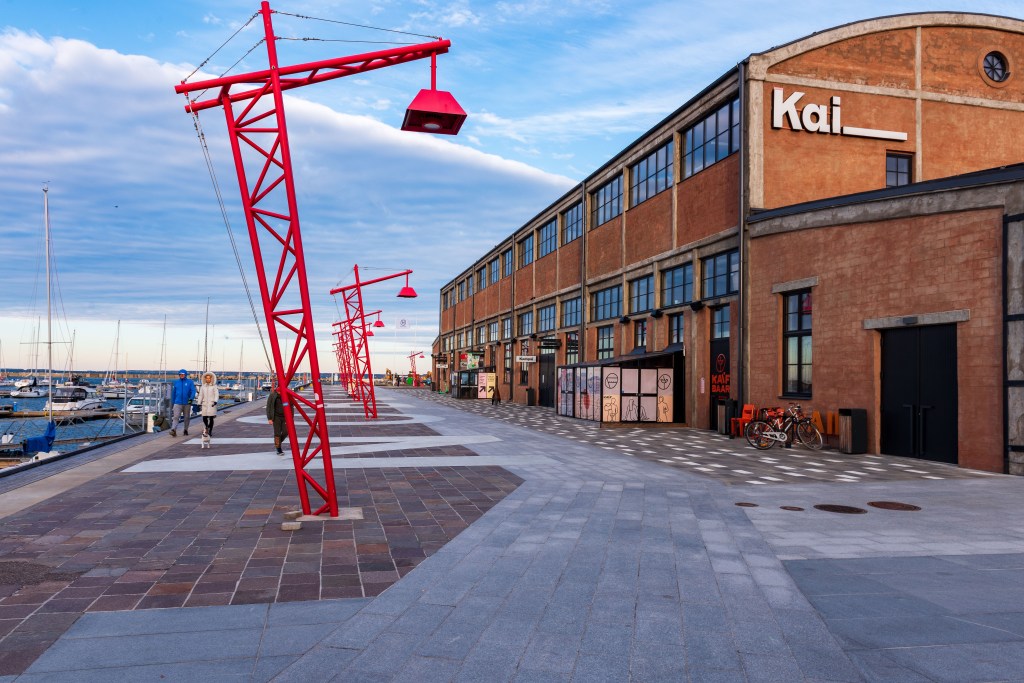
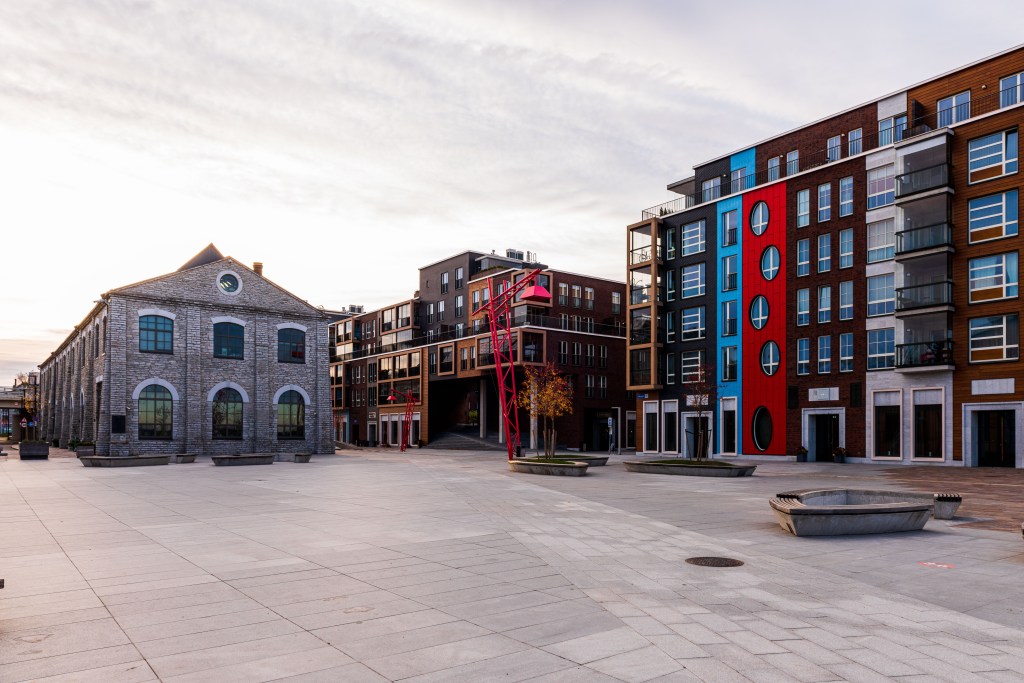
Continuing west, I arrived at Port Noblessner, a former port and heavy industrial area which was founded in 1912 (partly by Alfred Nobel’s nephew) and became the Russian Empire’s most significant submarine factory. After 1918, the shipyard switched to building smaller vessels and remained in use until as recently as 2018. The site is now being actively redeveloped with new-build residential development (apartments primarily) and the conversion of former industrial buildings into a range of leisure uses including a museum, a craft brewery, food and beverage outlets and high-quality office space. Again, I was impressed by the attention paid to detail, and the overall urban design concept, whereby buildings were generally surrounded by significant areas of public realm. I pondered, however, on where the disposable income is to service the cafes and bars, especially given the inflation rate in Estonia.
Finally, I turned south and went back to one of my favourite areas of Tallinn, Telliskivi. Another part of the city which once comprised high-density Soviet-era industrial buildings, it has now been rebranded as “Telliskivi – Creative City.” The former factories now house numerous organisations that operate within the arts and media sectors, and also offer a wide range of cafes, bars and restaurants (which are all pretty much the same thing in Tallinn!). Again, one wonders about disposable income, but having said that, there seemed to be no shortage of custom, even though the prices are relatively high. A pet gripe – add the word “craft” and the beer can be sold at a premium…..

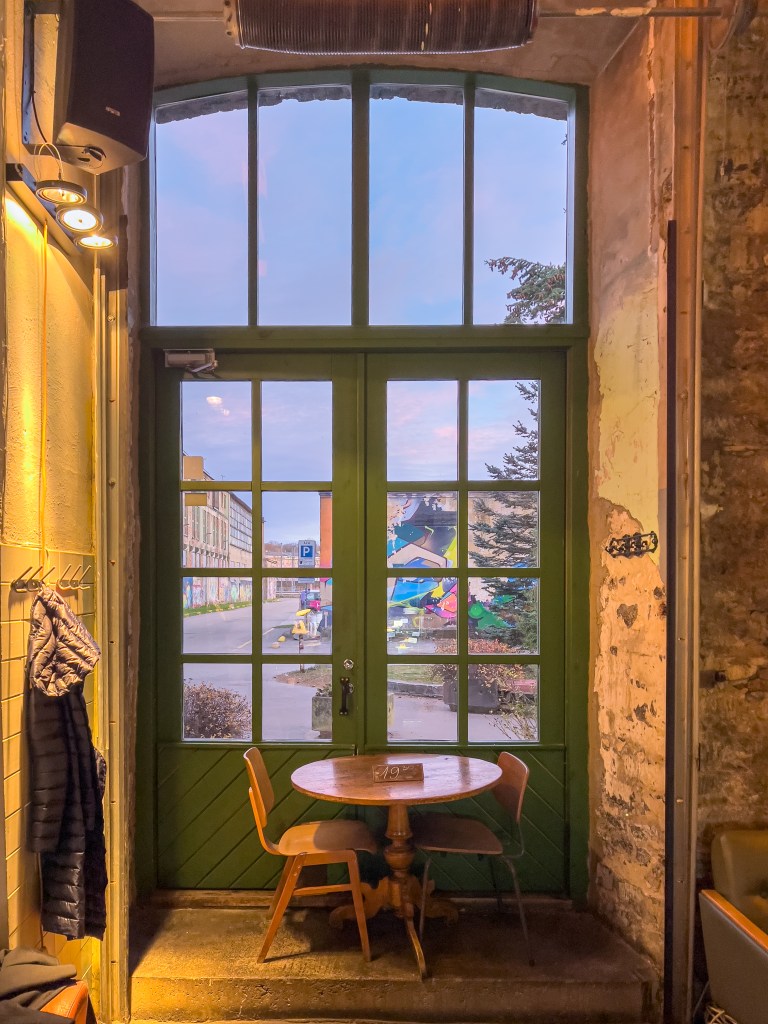
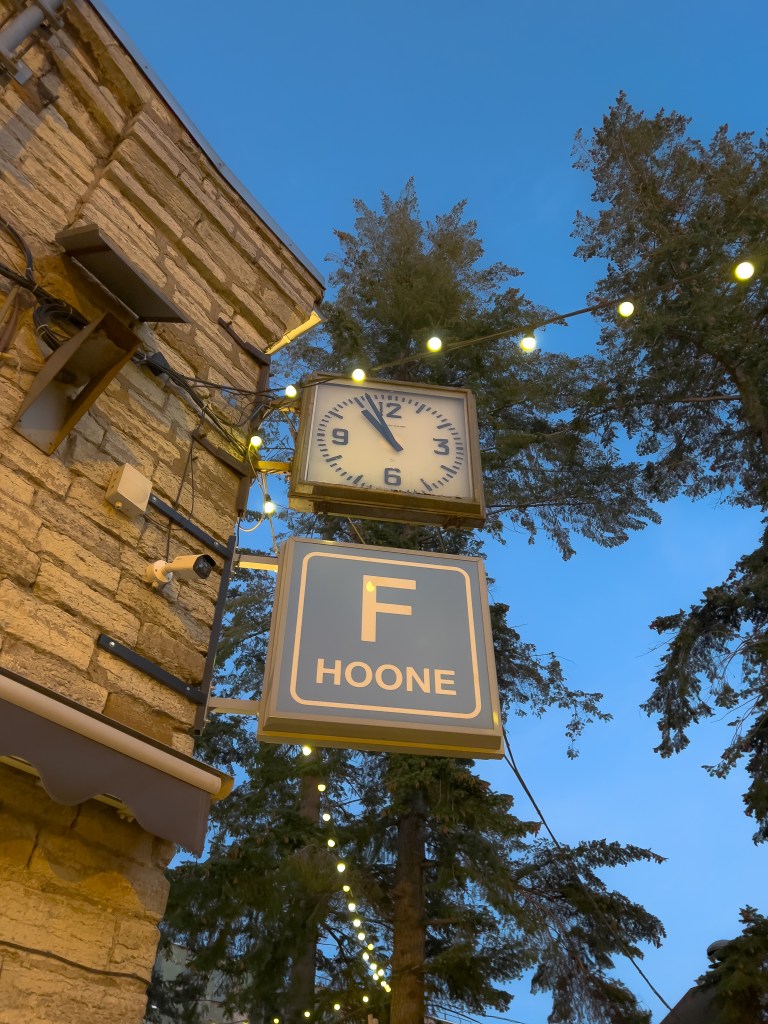
I completed my 10km plus walk with a few (“craft”) ales in my favourite bar in Telliskivi, a converted factory called “F Hoone”, and then returned to my hotel in the Old Town. As I ambled back, I reflected on the financial and popular support that the arts and cultural events and venues appear to have in Estonia (it is suggested that many of the conversions have been dependent on some State pump-priming), the quality of urban design and the fact that beer prices have gone up significantly since my last visit, some 9 months earlier….
-
Subscribe
Subscribed
Already have a WordPress.com account? Log in now.
 Simon's Planning and Regeneration Blog