I’ve just returned from a short trip to Tallinn, exploring and photographing the many innovative uses and conversions of (largely) former Soviet industrial areas and buildings. These make a valuable contribution to Tallinn’s brownfield land supply and also, interestingly, to its increasingly varied and rich cultural infrastructure. I was staying in the Old Town, which is deservedly a key visitor attraction in the Baltic States. However, it’s interesting to explore some of the areas less visited by tourists…..
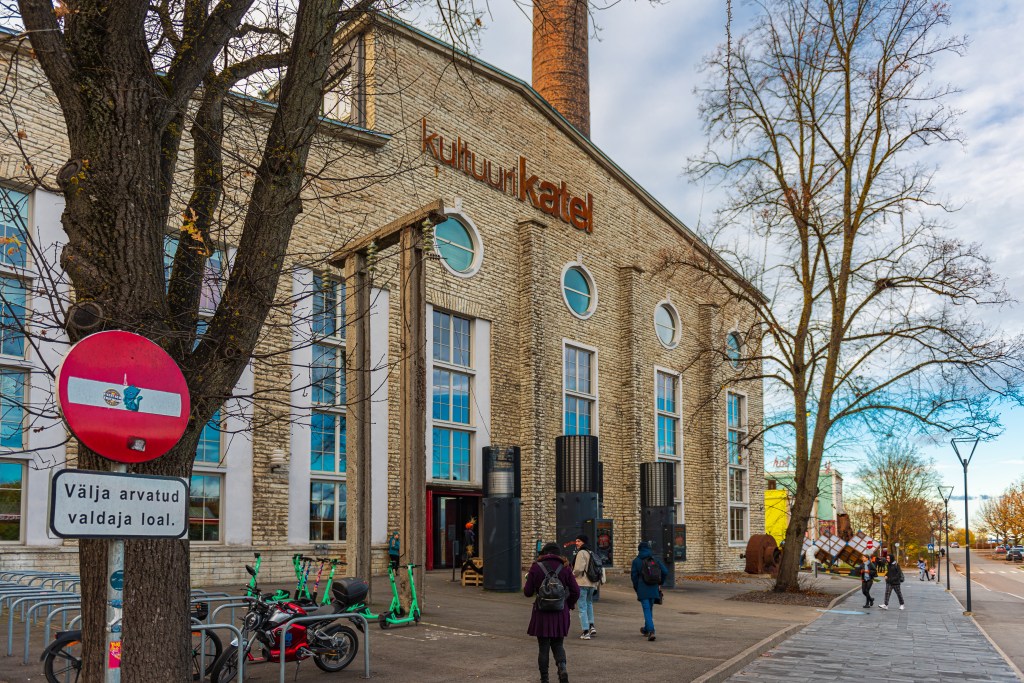
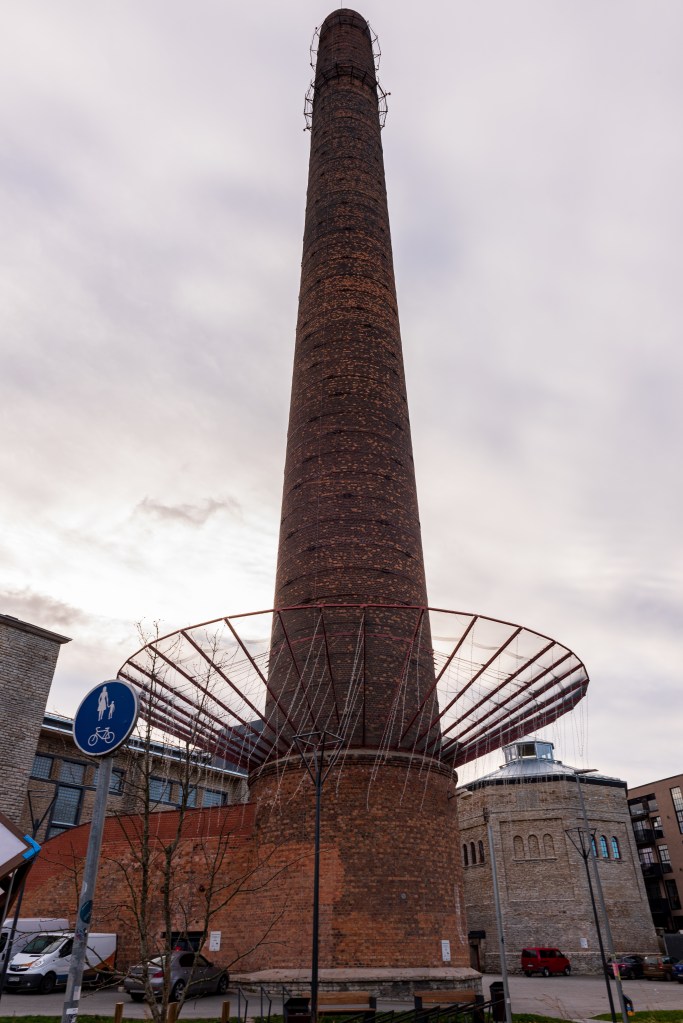
My exploration started immediately to the west of the main port, in an area dominated by a former coal-fired power station. This is now the Energy Discovery Centre, with its turbine hall now providing a large and lofty exhibition space. The former chimney stack is prominent in the cityscape, rising high above a number of other, smaller, former factory buildings, which are now also cultural assets. These include the Contemporary Art Museum of Estonia, which was showing an exhibition entitled “Crawl Out Through the Fallout” – which might be somewhat prescient, given the current geopolitical situation….
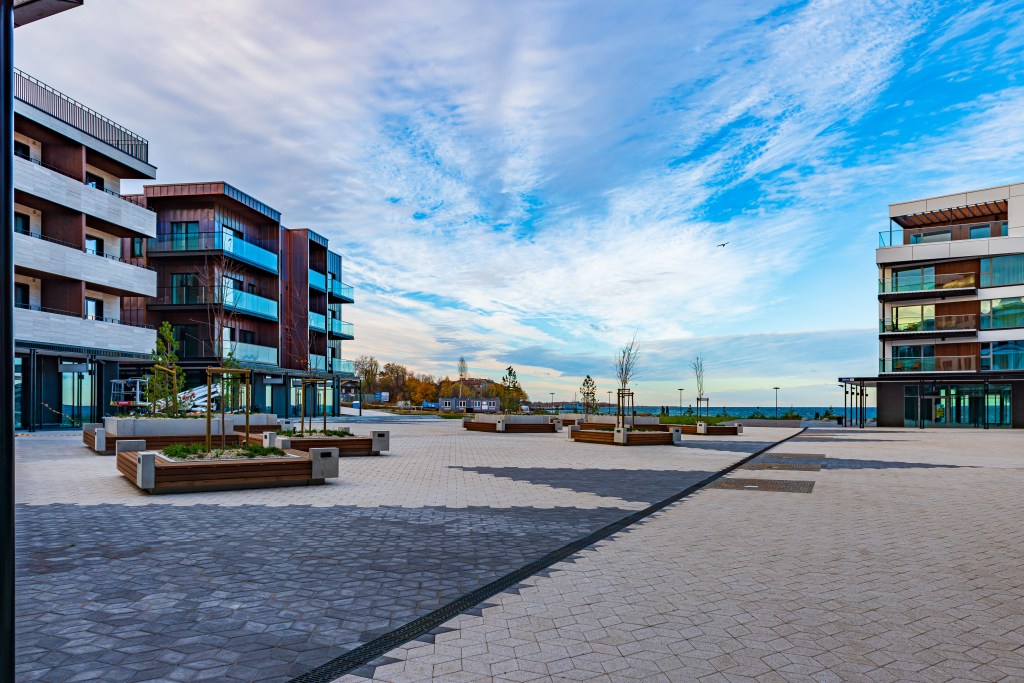
A few hundred yards further to the west is the emerging residential area of Kalaranna, a medium-density development of twelve four- and five-storey buildings on a brownfield site area of around 6 ha. It’s set on the shore, within an extensive hard and soft landscaped setting, including a new beach promenade. The completed phase includes 240 apartments, commercial space at ground floor level and underground car parking. I was impressed with the openness of the development within generous areas of public space and also the use of the former wharf area as a key urban design concept. The commercial space remains largely vacant, however, perhaps awaiting the development’s completion.
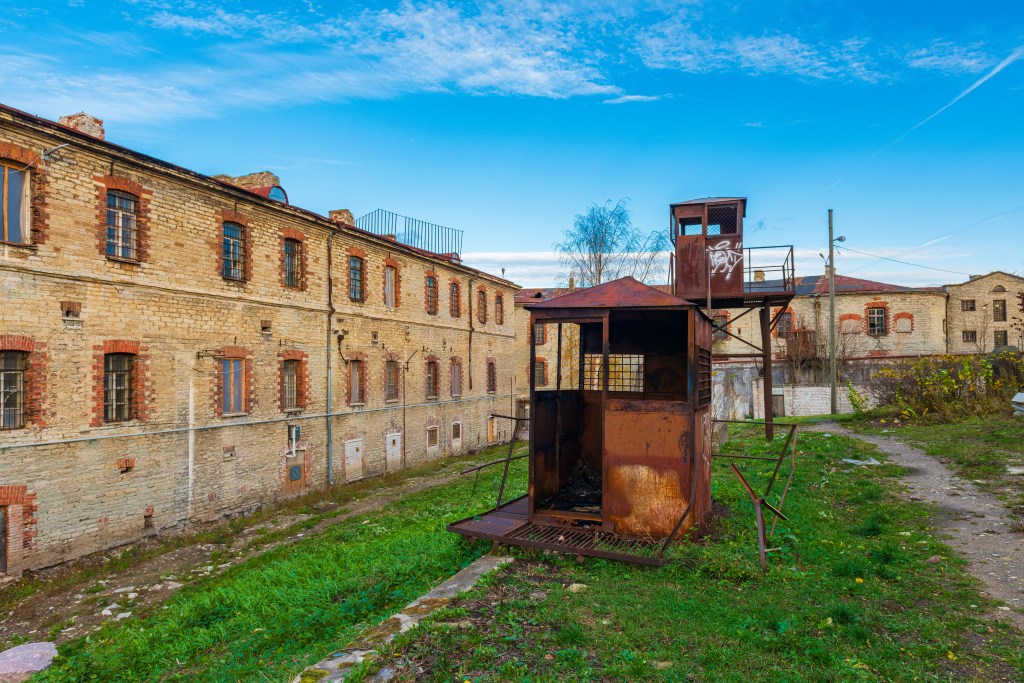
Walking further to the west, I came across, by accident, the former Patarei Prison. Dating from the 1830s, this foreboding and crumbling building has a grim history. Originally built as barracks, it was converted to a prison in 1919 and is considered to be a prominent symbol of both Nazi and Soviet political terror. It accommodated up to 1,500 prisoners and closed in 2002. It is planned to open it in 2025 as a museum to the crimes of communism; however, as you can see from the photos, no works appear to have commenced at all and the building slowly decays.

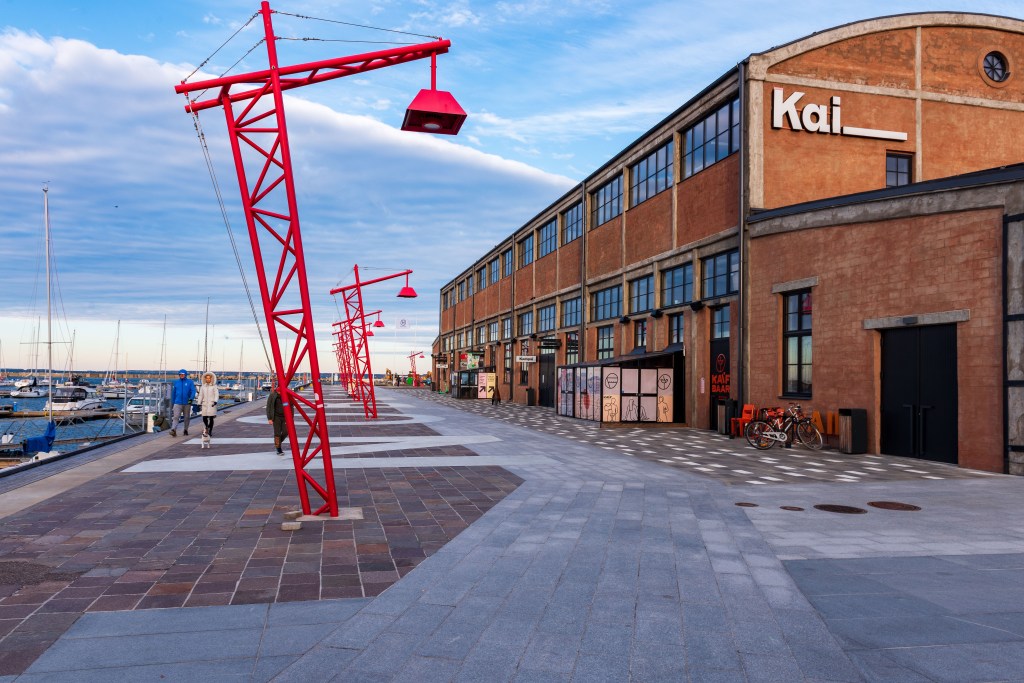
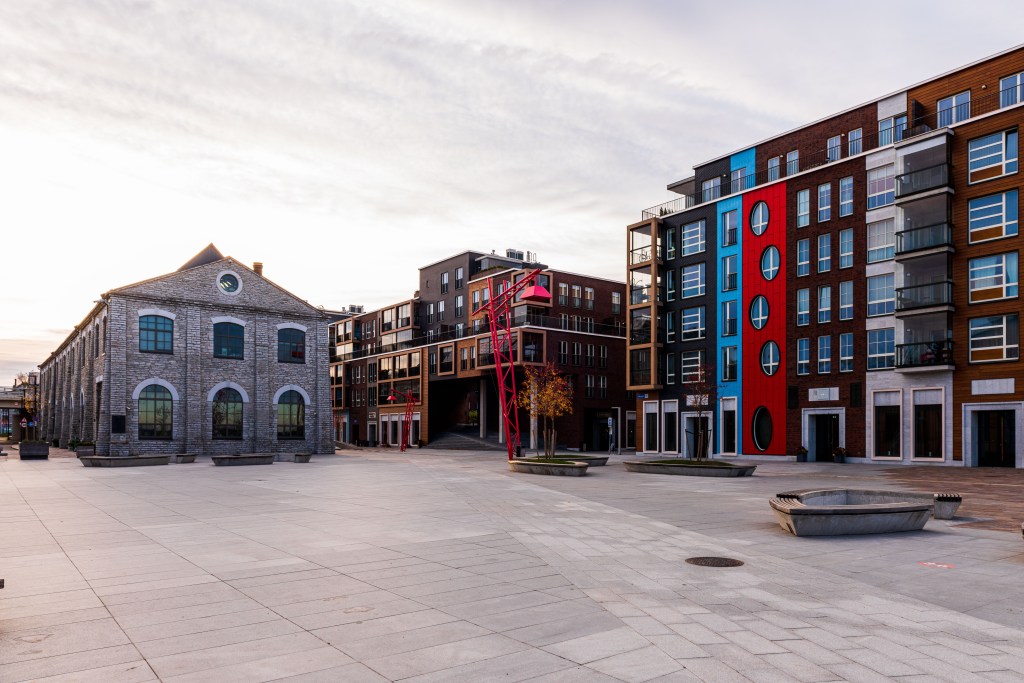
Continuing west, I arrived at Port Noblessner, a former port and heavy industrial area which was founded in 1912 (partly by Alfred Nobel’s nephew) and became the Russian Empire’s most significant submarine factory. After 1918, the shipyard switched to building smaller vessels and remained in use until as recently as 2018. The site is now being actively redeveloped with new-build residential development (apartments primarily) and the conversion of former industrial buildings into a range of leisure uses including a museum, a craft brewery, food and beverage outlets and high-quality office space. Again, I was impressed by the attention paid to detail, and the overall urban design concept, whereby buildings were generally surrounded by significant areas of public realm. I pondered, however, on where the disposable income is to service the cafes and bars, especially given the inflation rate in Estonia.
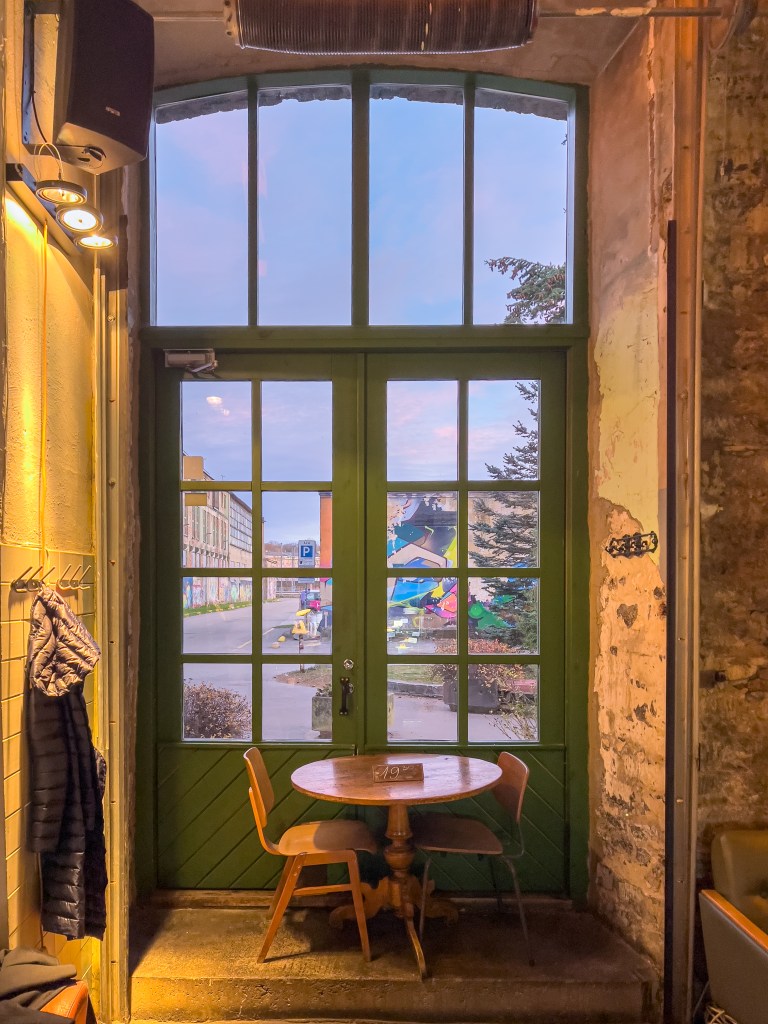
Finally, I turned south and went back to one of my favourite areas of Tallinn, Telliskivi. Another part of the city which once comprised high-density Soviet-era industrial buildings, it has now been rebranded as “Telliskivi – Creative City.” The former factories now house numerous organisations that operate within the arts and media sectors, and also offer a wide range of cafes, bars and restaurants (which are all pretty much the same thing in Tallinn!). Again, one wonders about disposable income, but having said that, there seemed to be no shortage of custom, even though the prices are relatively high. A pet gripe – add the word “craft” and the beer can be sold at a premium…..

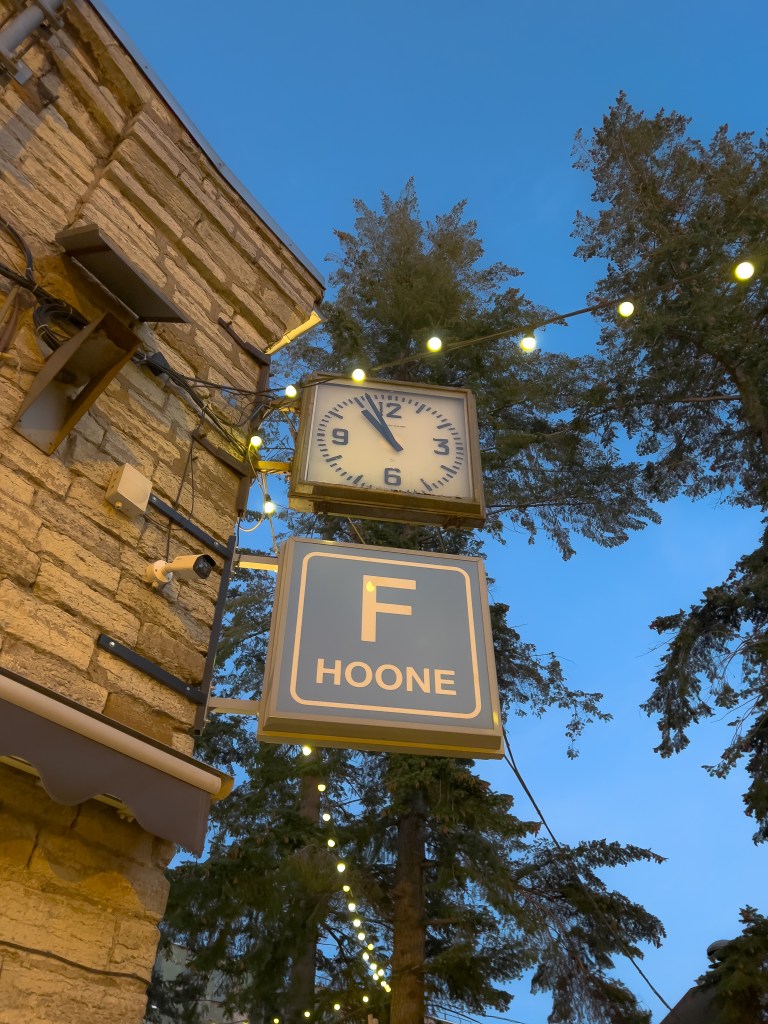
I completed my 10km plus walk with a few (“craft”) ales in my favourite bar in Telliskivi, a converted factory called “F Hoone”, and then returned to my hotel in the Old Town. As I ambled back, I reflected on the financial and popular support that the arts and cultural events and venues appear to have in Estonia (it is suggested that many of the conversions have been dependent on some State pump-priming), the quality of urban design and the fact that beer prices have gone up significantly since my last visit, some 9 months earlier….
 Simon's Planning and Regeneration Blog